How to watch VALORANT Champions Shanghai group stage like a pro analyst
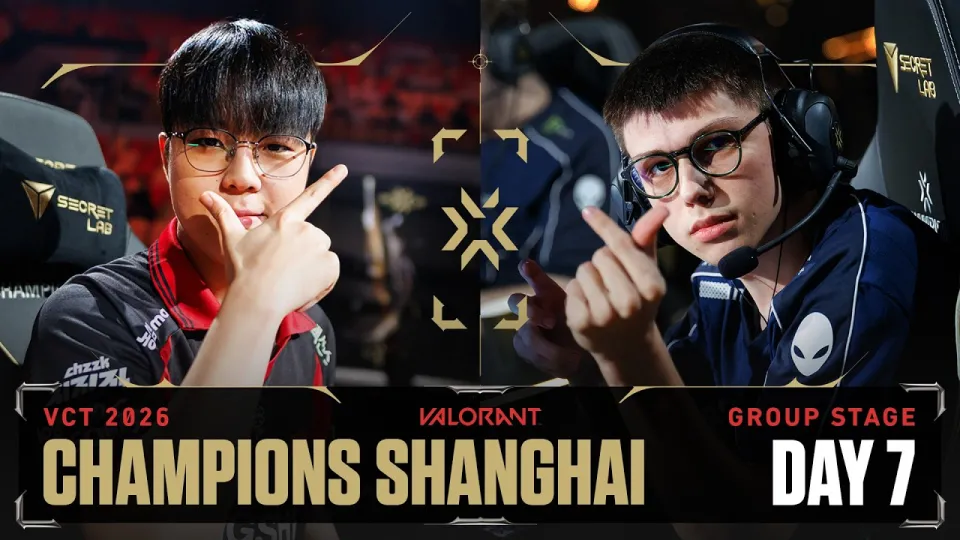
Video: VALORANT Champions Shanghai — Group Stage — Day 7
Want articles like this for your own video to promote it on YouTube and Google? Order them through the Telegram bot @sat_sit_bot. The bot writes and publishes the articles itself (with your YouTube video embedded) on popular topical websites (no ads). Try it free: 50 articles on us.
· based on the channel VALORANT Champions Tour
Watching VALORANT Champions Shanghai group stage properly means knowing the format, the broadcast rhythm and what actually decides a best-of-three at this level. The event runs from September 24 to October 18, brings 16 teams from Americas, CN, EMEA and Pacific to one stage, and Day 7 of the group stage is where the bracket math starts to bite. Live updates, brackets and announcements land fastest on the official VALORANT Esports X account.
What the VALORANT Champions Shanghai group stage actually is
The group stage is the opening phase of the 2026 world championship, and its job is to cut 16 teams down before the playoff bracket. Every squad at Champions qualified through its regional circuit, which is why the field mixes established names with a younger generation of challengers that broke through during the year. The event description frames it plainly: familiar names, new contenders, and a fearless crop of challengers competing for the biggest trophy of the year.
The format rewards consistency rather than one hot map. Group play is where teams that rely on a single comfort pick get exposed, because opponents scout tendencies across several matches and ban accordingly. That is also why Day 7 matters more than Day 1: by the seventh broadcast day, every team's map pool, pistol-round setup and post-plant defaults are on tape.
Why Day 7 is the pivot point of the group stage
Day 7 sits late enough in the group stage that results stop being isolated and start shaping seeding. A team sitting at 2-1 is playing for a cleaner playoff path, while a team at 1-2 is effectively in a knockout match without the label. The difference between finishing first and second in a group can be the difference between facing a regional rival and facing one of the Masters winners.
The 2026 season adds extra weight to that seeding. Two separate Masters events produced two different champions, which means Shanghai is the first tournament where both of those rosters occupy the same bracket. Nobody at Champions has a recent head-to-head sample against both, so group-stage seeding decides who has to solve that problem first.
The four regions and what each one brings
The regional split is the cleanest way to read the group stage. Sixteen teams across Americas, CN, EMEA and Pacific means four distinct meta approaches colliding on the same patch.
- Americas — historically aggressive, early-round map control, heavy use of duelist tempo to force site takes before rotations settle.
- EMEA — structured default play, disciplined utility usage and slow, information-first executes; EMEA rosters tend to win the mid-round chess match.
- Pacific — mechanically sharp individual players, frequent off-angle holds and a willingness to take duels that other regions avoid.
- CN — fast, set-play-driven compositions that look dominant when the script works and fragile when opponents disrupt the first contact.
The recurring criticism of CN teams in the Day 7 comments fits that pattern: viewers pointed at lost eco rounds, blown 5v2 retakes and a lack of creativity once set strategies broke down. Whether or not that read is fair, it describes a real structural question — how much of a region's success depends on prepared executes versus improvised mid-round calls.
Reading a Champions broadcast without spoilers
A long group-stage broadcast day is best consumed with a plan, especially if you are watching the VOD rather than the live stream. The official channel publishes full-day VODs, and the community habit is to use timestamp comments to jump straight to the maps you care about.
- Use a spoiler-blocking timestamp list so the scoreline is not revealed before the map starts.
- Expect tech pauses: Day 7 viewers flagged an unusually long series of them, so build buffer time into a VOD session.
- Watch the pistol rounds first if you are short on time — at Champions they set the economy tone for the entire half.
- Skip to the second half of a close map to see how teams adjust after losing the opening pistol.
Tech pauses are worth mentioning because they are not neutral. A long break resets momentum, gives coaches extra time to talk through adjustments and can flip the rhythm of a team that was rolling. Viewers noticed the pattern immediately, and it is a legitimate variable when you evaluate a comeback.
Common viewer questions about the Shanghai group stage
Most confusion around the group stage comes from mixing up formats. Champions is not a round-robin league; it is a compressed bracket where map differential and head-to-head results can matter as much as raw wins. A team that wins 2-0 twice can be seeded above a team with the same record built on 2-1s.
The second common question is about regional strength. Comments after Day 7 argued that stronger teams from other regions missed Champions entirely, which is a fair critique of any qualification system — regional slots guarantee representation, not necessarily the sixteen best rosters on the day. The only answer the tournament offers is the bracket itself.
The third is about player form. Individual standouts get singled out fast, and a single highlight round can overshadow a map of quiet, correct utility work. When you judge a player at Champions, look at traded deaths and utility efficiency, not just the kill feed.
How to use the broadcast as a learning tool
Champions VODs are the best free coaching material available, provided you watch them with intent. Pick one team, watch only their attacking halves, and note three things: their default setup at the start of each round, the trigger that makes them commit to a site, and how they spend utility in the first 30 seconds.
Do that across a full group-stage day and patterns appear quickly. You will see which teams run the same execute three rounds in a row and which ones rotate their opening contact point to deny scouting. That is the difference between a team that survives groups and a team that gets figured out in playoffs.
Useful links
- Live updates and announcements on X
- VALORANT Esports on Facebook
- VALORANT Esports on Instagram
- VALORANT Esports on TikTok
- Official VALORANT stream on Twitch
Final takeaway
The group stage at VALORANT Champions Shanghai is less about who wins on Day 7 and more about which teams have a second gear when their prepared plays get read. Sixteen squads, four regions and two Masters champions in one bracket make this the most consequential opening phase of the 2026 season. Watch the tech pauses, watch the eco rounds, and watch which teams adapt mid-map — that is where the eventual champion usually shows up first. The full-day broadcast is produced by the VALORANT Champions Tour channel, and following @valorantesports on X is the fastest way to catch bracket updates before the next stream.
Key takeaways
- VALORANT Champions Shanghai runs September 24 to October 18, with 16 teams from Americas, CN, EMEA and Pacific fighting for the 2026 world title.
- Group Stage Day 7 is the seventh broadcast day of the opening phase, streamed on the official VALORANT Champions Tour channel.
- Two different teams won Masters events in 2026, so Shanghai is the first tournament where both new champions share one bracket.
- The Day 7 broadcast drew attention for repeated tech pauses, which viewers tracked with spoiler-blocking timestamps.
- Chinese teams took heavy criticism in the comments for losing eco rounds and 5v2 retakes, fueling debate about CN's depth.
Questions & answers
What is the format of the VALORANT Champions Shanghai group stage?
Sixteen qualified teams from Americas, CN, EMEA and Pacific are split into groups and play a compressed series of matches to decide playoff seeding. Map differential and head-to-head results can separate teams with identical win records, so 2-0 wins carry real value.
Why were there so many tech pauses during Day 7?
Technical pauses happen when a player's setup, server connection or in-game issue needs resolving, and a long broadcast day can stack several of them. They matter competitively because extended breaks give coaches time to reset a struggling team's approach.
Are Chinese teams really weaker than other regions at Champions?
CN rosters qualified through their regional circuit and earned their slots, but viewers have pointed out that some strong teams from other regions missed the event entirely. CN squads tend to look best when their set executes land and struggle when opponents disrupt first contact, which is a style question as much as a skill one.
Where can I follow results and bracket updates?
The official VALORANT Esports channels publish results, brackets and schedule changes, with X being the fastest for live updates. Full match VODs appear on the VALORANT Champions Tour YouTube channel after each broadcast day.
Source: VALORANT Champions Shanghai — Group Stage — Day 7 · Markdown version